Free written quote within 24 hours — Kingston & area
📞 (613) 555-0199

Buying a Kingston House with Knob and Tube Wiring

The inspector found knob and tube and suddenly your financing, your insurance and your closing date all depend on old wiring. Don't panic, and don't walk away blind — this is a known, priceable problem, and handled right it becomes your best negotiating tool.

Free written quote in 24 h ECRA/ESA-licensed partner electricians ESA Certificate of Inspection on completion Kingston, Gananoque, Napanee & area

What knob and tube really means for your purchase

At Knob & Tube Kingston we talk to buyers at the same moment every time: three days into a condition period, inspector's report in hand, wondering whether the century home they fell for is about to fall through. Here's the calm version of what's actually happening — and how to turn it to your advantage.

How it shows up

Sometimes the listing tips you off — "some knob and tube, believed inactive" is Kingston realtor code for "we didn't check." More often it's your home inspector, shining a flashlight along the basement ceiling and finding white ceramic knobs and two separate cloth-covered strands where modern cable should be. In Kingston's pre-1930 housing stock — Sydenham Ward, Portsmouth, Williamsville, Kingscourt and the Inner Harbour — live knob and tube is not the exception in unrenovated homes; it's the default assumption. If the house was built before 1950 and nobody can produce rewiring paperwork, plan as if it's there.

Why your lender and insurer suddenly care

The wiring itself won't stop a sale. The paperwork chain around it can. Your mortgage lender requires proof of home insurance to close. But most standard Ontario insurers — TD, Aviva and Intact among them — refuse coverage on homes with active knob and tube, or surcharge premiums by 50–300%. The workable middle path is a conditional policy: the insurer covers the house on the condition the wiring is replaced, typically within 30–90 days, and wants to see a credible remediation plan — usually a written quote from a licensed electrician. Our insurance page covers this mechanism in detail. The point for you as a buyer: none of this is improvised at the closing table. It's arranged during your condition period, and it works.

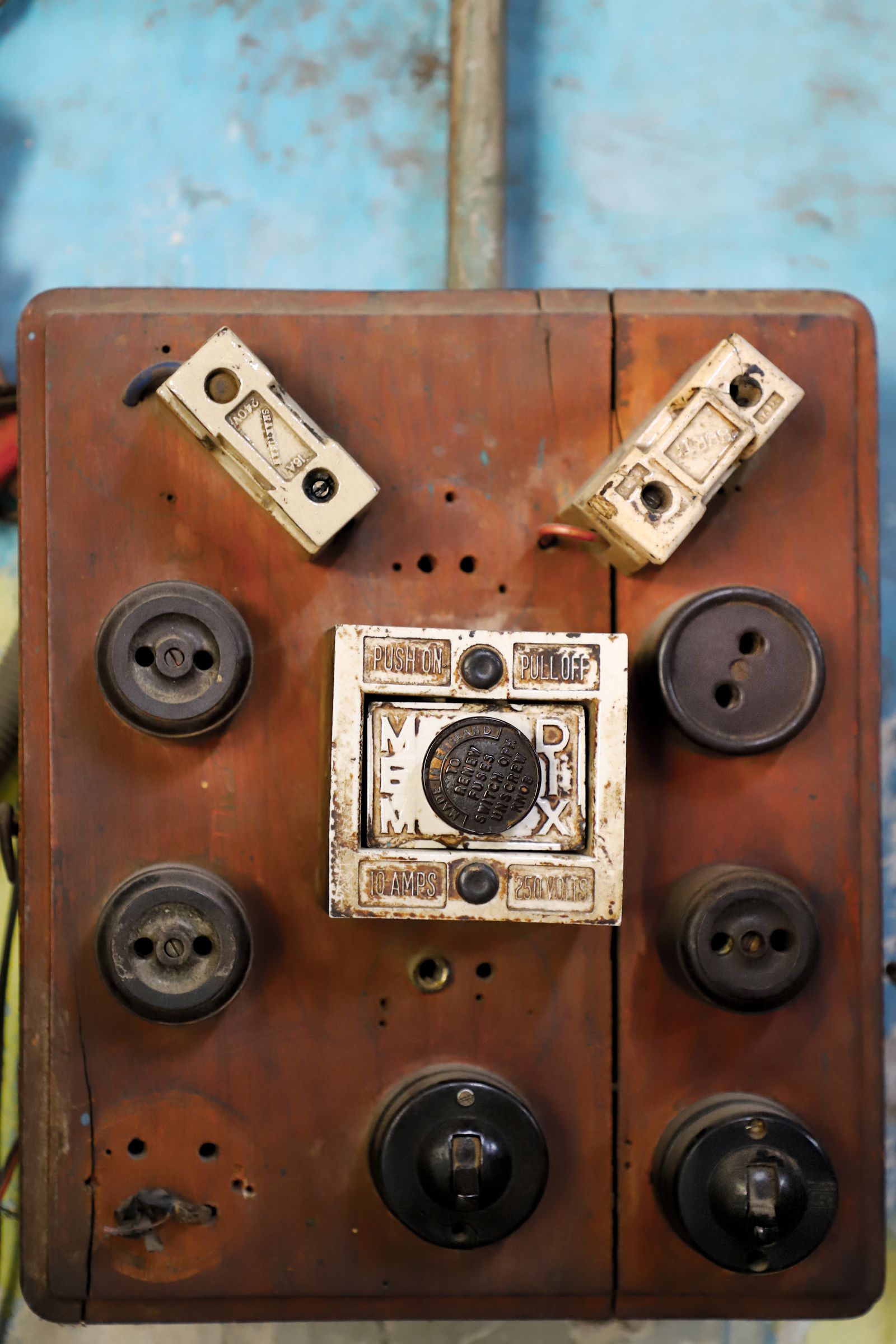
Antique wooden fuse board of the kind found in unrenovated Kingston century homes
An original fuse board is the smoking gun: if the panel dates from the knob-and-tube era, assume the circuits behind it do too.

The negotiation play: get the number, then use it

Knob and tube kills more deals through panic than through cost — because nobody in the room has a number. So get the number. During your inspection-condition period, have a licensed electrician assess the house and produce a written rewire quote. In Kingston that typically lands between $3,000–$6,000 for partial replacement, $5,000–$8,000 for a full bungalow rewire, $8,000–$15,000 for a two-storey, and $14,000–$25,000 for a large century home including a 200-amp panel upgrade (full breakdown on our cost page).

Then negotiate the purchase price down by the quote amount, or ask for an equivalent credit. Your leverage is simple: the problem is now documented, and every future buyer's inspector will find the same thing. The seller's realistic choices are to deal with you or to have the identical conversation with the next buyer — a calculus we walk sellers through on the selling side of this site. Most sellers of century homes know it and negotiate.

The closing-timeline play

Here's the sequence that gets buyers from "inspector found knob and tube" to "keys in hand, wiring scheduled":

  • During conditions: electrician's assessment and written quote; insurer issues a conditional policy with a 30–90 day remediation window; lender accepts it; price renegotiated with the quote as the anchor
  • Firm up: conditions waived, rewire booked for the week after closing — the empty house between possession and move-in is the cheapest, fastest window a rewiring crew will ever get
  • After closing: rewire done in 3–10 working days under ESA permit by an ECRA/ESA Licensed Electrical Contractor, then ESA inspection and Certificate sent to your insurer
  • Result: condition lifted, standard rates restored — typically $500–1,500 a year cheaper than surcharged high-risk coverage, every year you own the house

Run that sequence and you've bought the house you wanted, at a price that reflects its real condition, with brand-new grounded wiring you chose and supervised — often largely funded by the price reduction itself. If you're still weighing how risky the wiring actually is in the meantime, our honest take is on is knob and tube safe?.

In a condition period right now? Deadline files get scheduled first. Request a quote and mention your condition-waiver date, or call (613) 555-0199 — a written assessment and quote can usually be arranged within days, fast enough to use in your negotiation.

Frequently asked questions

Should I walk away from a house with knob and tube?

Usually not — at least not because of the wiring alone. Knob and tube is a known, priceable problem: partial replacement runs $3,000–$6,000, a full two-storey rewire $8,000–$15,000, and a large century home with a 200-amp panel upgrade $14,000–$25,000. Walk away if the seller refuses to negotiate on a documented problem, or if the wiring is one of many major deferred-maintenance items. Otherwise, a written rewire quote turns a scary unknown into a line item you can negotiate off the price.

Can I get a mortgage on a house with knob and tube?

Yes, but with a catch: your lender requires proof of insurance to close, and most standard insurers refuse or surcharge homes with active knob and tube. The usual path is conditional coverage — the insurer issues a policy on the condition the wiring is replaced within 30–90 days, the lender accepts that, and the deal closes. Line up the insurer, the conditional policy and the rewire quote during your condition period, not the week before closing. Full mechanics on our insurance page.

Who pays for the rewire — me or the seller?

In practice it's negotiated, and the buyer holds the leverage. Once your inspector documents knob and tube, every future buyer's inspector will find it too — the seller can't un-know it. The standard play is to get a written rewire quote during your condition period and negotiate the price down by that amount (or ask for a closing credit). You then control the work: your electrician, your schedule, done properly under ESA permit after closing.

How fast can the rewire be done after closing?

Most Kingston homes are rewired in 3–10 working days once the crew starts, and the ideal window is between closing and move-in, when the house is empty. If you've arranged conditional insurance with a 30–90 day remediation window, book the electrician during the condition period so the work is scheduled the moment you have keys. The ESA Certificate of Inspection then goes to your insurer, the condition is lifted, and your rates drop to standard — typically saving $500–1,500 a year versus surcharged coverage.

How do I get a rewire quote on a house I don't own yet?

Through your inspection-condition period. Your offer includes a home-inspection condition; once the inspector flags knob and tube, you (via your agent) request access for a licensed electrician to assess and quote — sellers of century homes see this routinely. The electrician traces what's live, and you get a written number within days. That document does three jobs: it satisfies your insurer's request for a remediation plan, it reassures your lender, and it anchors your price negotiation.

The listing says "some knob and tube, believed inactive." Can I trust that?

Treat it as a starting point, not a fact. "Believed inactive" often means a previous owner rewired the easy circuits and left the rest, or disconnected wiring at the panel without removing it from the walls. Only a licensed electrician tracing the circuits can tell you what's actually live — and insurers will want that verification in writing, not the listing's wording. Budget as if some of it is live until proven otherwise.

Free quote within 24 hours

Describe your situation — an advisor calls you back the same day to book the assessment. No obligation.

Prefer to talk?
(613) 555-0199
Monday to Saturday, 7 am – 7 pm

Your contact details are used only to call you back about your quote. No spam, ever.

Thank you! We'll call you back within business hours.

Hundred-year-old wiring never gets better on its own

Licensed rewiring, ESA inspection, certificate to your insurer. Call now or request your free quote online.

Call (613) 555-0199
📞 Call now Free quote